
By Sam Grubenhoff
Sep. 19, 2016
MUSTANG, Oklahoma — As night came and the band played the national anthem into the setting sun, no football player took a knee in Mustang, Oklahoma.
The tubas and trombones rang out in patriotic symphony while fans, coaches and players alike stood solemnly Friday night, waiting for a heated road match between Mustang High and Stillwater to start.
Stillwater coach Tucker Barnard said he never had to ask his players to respect the flag, and some of the players agreed the thought of taking a knee for the national anthem hadn’t crossed their minds.
“It’s not something we’ve talked about,” Barnard said.
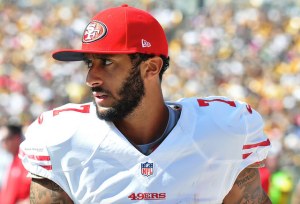
The topic has become trendy in the past month after San Francisco quarterback Colin Kaepernick elected to remain seated on a sideline bench during the national anthem in the 49ers’ third preseason game Aug. 26.
Kaepernick told reporters in a post game press conference he was protesting the oppression and violence against “black people and people of color,” in response to several nationally recognized acts of violence during the summer.
It wasn’t the first time Kaepernick had done it, for it was revealed later his silent protest had gone unnoticed in the first two preseason games, but it gained the attention of Kaepernick’s peers. Soon after, others began to follow, taking a knee or raising a fist in protest, first at the professional level and then the collegiate level. The practice has endured since.
Barnard, who also serves as Stillwater’s athletic director, said he agreed the practice could soon find it’s way to high school campuses across the country, even his own.
“Absolutely,” Barnard said. “I think it sure could. I don’t know that that’ll happen. I don’t know if we’ll see that or not.”
Barnard said he believes all athletes, no matter what level or sport they play possesses a platform of influence within the community, and he hopes those athletes choose to use their position for the betterment of the whole.
“I’ve got two little boys that are running around in this locker room and running around on the football field,” Barnard said. “And so my football players have a platform to the youth in Stillwater. They don’t have a national platform; nobody knows outside of Stillwater, Oklahoma, who [senior safety] Connor Wilcoxen is, but my boys do.”
As a school administrator, Barnard said he could see that platform expanded to include more than athletes on a football field, and if a student decided to use that platform, Barnard hopes the student has fully considered the impact of his or her actions.
“Somebody’s watching when you’re a high-profile athlete, or really involved in anything,” Barnard said. “It might be that you’re the first-chair trumpet, and there’s a little kid that knows you’re in the band and watches you every week.
“You have a platform, so I hope however you decide to use that, I hope kids are at least deliberate in knowing what they think and knowing why they think it and that they’re not just doing it because they’ve seen somebody else do it.”
Although Barnard agrees the topic is an issue, some of his players don’t see any good coming from Kaepernick’s actions.
After practice Wednesday, three players, Wilcoxen, Josiah Castleberry and Christian Bahl, walked off the field in good spirits. Practice had gone well, and their week was almost over. The question of Kaepernick seemd to derail the jovial mood.

Wilcoxen looked to Castleberry, a senior running back and one of the few black players on the team.
“I feel like you have something to say about that,” Wilcoxen said.
The prodding wasn’t mean-spirited. The two have been friends and teammates for the past three years. Both are team leaders, but the question seemed to hit home for Castleberry, for he pondered for a moment before brushing it off.
“Kinda stupid,” Castleberry said. “Not any real deep thoughts about it. I guess I can see why he’s angry, but just seeing him there doing that doesn’t really help anything.”
Wilcoxen quickly disregarded Kaepernick’s protests as the media’s latest obsession.
“I think he might start a trend for a while, but overall he’s going to have way less supporters,” Wilcoxen said.
Bahl, also a senior safety, agreed with his friends’ assessments. He said he wanted more action, not inaction.
“It doesn’t fix anything,” Bahl said. “He just causes more of a problem. I think it makes everything worse. They could just try to actually fix it in a different way. Sitting down and making a scene, it doesn’t work. It just causes more problems. He’s not doing anything to help the problem. He’s just doing more things that add wood to the fire.”
Despite the national attention Kaepernick’s actions have garnered, the three agreed they didn’t think oppression of minorities was as big of a deal in Oklahoma.
Barnard said he didn’t care to debate the semantics of whether Kaepernick’s actions are right or wrong because protest is within Kaepernick’s constitutional rights.
“I think what I believe, personally, is that I was raised with, ‘We show respect to the flag,’” Barnard said. “We show respect to our country. We’re patriotic and that’s what we believe. But at the same time, I also know that what that flag stands for is our ability to express our opinion.
Kaepernick’s right to protest is protected under the First Amendment, and Barnard said if one of his players was to join the protest, Barnard would respect that player’s right.
“Ultimately, I don’t have a control over every kid’s words or actions or thoughts, but I’m a coach,” Barnard said. “Hopefully, I could at least help him think through his side of the issue and what he thinks he believes.”
Regardless of any issues he might have with it, Barnard said he understands the merit in Kaepernick’s actions and the impact it can have on society.
“It’s just divisive, and I think it’s probably good for us, though, that we’re talking about it,” Barnard said. “If we could have more honest conversation and less just trying to hammer our ideas onto somebody else, we’d be in a better spot.”

 Sam Grubenhoff